
Lab-grown vs natural diamonds: what really differs
Lab-grown and natural diamonds are the same carbon crystal. They differ in origin, price and resale, and only a laboratory can tell them apart.
Maison Shifora · · 6 min read
A lab-grown diamond is a real diamond: the same pure carbon, the same crystal structure, the same hardness and the same sparkle as a diamond mined from the earth. The differences are its origin, its price, which is usually far lower, and its resale value, which is usually far weaker. You cannot tell the two apart by eye or with a jeweller's loupe; only laboratory testing can, and a grading report from a laboratory such as IGI or GIA states which one you have.
We work with natural and lab-grown diamonds every day. This guide sets out the facts plainly, so you can choose with confidence rather than on marketing.
Same material, different origin
Both kinds of diamond are crystals of carbon arranged in a cubic lattice. That is what makes a diamond a diamond, and it is why both score 10 on the Mohs scale of hardness and both bend light in the same way.
- A natural diamond formed deep in the earth over a very long period, under great heat and pressure, and was carried to the surface by volcanic activity before it was mined.
- A lab-grown diamond is grown in a few weeks in a controlled environment. There are two main methods: HPHT (high pressure, high temperature), which recreates the conditions deep in the earth, and CVD (chemical vapour deposition), which builds the crystal layer by layer from a carbon-rich gas.
Once grown, a lab-grown rough crystal is cut and polished on the same wheels, by the same kind of craftsmen, as a natural one.
What lab-grown is not
It helps to clear up three common confusions:
- Not a simulant. Cubic zirconia, moissanite and glass only imitate a diamond. They are different materials with different hardness and different optical properties. A lab-grown diamond is not an imitation.
- Not "fake". The word is misleading. A lab-grown diamond is chemically and physically diamond; it simply was not mined.
- Not interchangeable in the paperwork. The origin must be disclosed. Trade rules in many countries require a lab-grown diamond to be described clearly, with words such as "laboratory-grown" or "lab-created", and never sold as natural.
How they look
Grade for grade, a lab-grown and a natural diamond look the same. A 0.50 ct round brilliant with F colour, VS1 clarity and an excellent cut has the same fire and brilliance whichever way it was formed.
Both are graded on the same 4Cs: cut, colour, clarity and carat weight. Both can have inclusions, and both come in a range of colours. The cut matters as much for one as for the other: a poorly cut diamond of either kind looks dull, and a well-cut one comes alive.
How to tell them apart
You cannot tell them apart by looking, even with a 10× loupe. The handheld "diamond testers" used in many shops measure how fast the stone conducts heat, and they report "diamond" for both kinds.
Telling the origin requires a gemmological laboratory. Laboratories use instruments that read how the crystal grew and which trace elements it contains: spectroscopy, which reads how the stone absorbs light, and ultraviolet imaging, which shows the growth patterns that differ between earth-grown, HPHT and CVD crystals. These tests are the reason a laboratory report is worth having.
What a grading report tells you
A grading report from IGI (International Gemological Institute) or GIA (Gemological Institute of America) records the 4Cs, the measurements and the proportions of a stone. For a lab-grown diamond, the report says so clearly, and it usually notes the growth method where the laboratory has identified it.
Two practical points:
- Check the origin line. Every report states whether the diamond is natural or laboratory-grown. Read it before you buy, not after.
- Check the inscription. Many graded diamonds carry a tiny laser inscription on the girdle, the thin outer edge, with the report number. A jeweller can show it to you under magnification and you can match it to the report online on the laboratory's website.
Price
This is the biggest practical difference. A lab-grown diamond usually costs a fraction of the price of a natural diamond of the same size and grade, and the gap has widened over the past several years as growing methods have become faster and cheaper.
That lower price lets you choose a larger stone or a higher grade for the same budget. It also means lab-grown prices can keep falling as production grows, while natural diamond prices rest on a limited supply that is mined, not made.
The metal is priced the same either way. Gold and platinum follow the live market whatever stone they hold; our live metal rates show today's numbers, and our guide to how our live pricing works explains each line of a price.
Resale and long-term value
Neither kind of diamond is a guaranteed investment, and you should be wary of anyone who promises otherwise. A retail price includes cutting, setting, grading and the jeweller's costs, so a natural diamond resold usually fetches less than its original retail price.
For lab-grown diamonds the resale market is much thinner. Few buyers and dealers buy them back, and when they do the offer is usually a small share of the original price. If you may want to sell, trade in or pass a stone on as part of its value, natural diamonds hold that value far better. If you are buying purely for beauty and for a larger stone within a budget, lab-grown makes sense.
Origin and the bigger picture
Clients often ask which choice is better for people and the planet. The honest answer is that it depends on the source. Mined diamonds support livelihoods in producing countries and are traded under certification schemes for conflict-free rough; growing diamonds uses a great deal of energy, and its footprint depends on how that energy is produced. A responsible supplier of either kind can tell you where a stone came from.
Choosing between them
- Choose natural if rarity, heritage and long-term value matter to you, or if the piece is meant to be an heirloom.
- Choose lab-grown if you want the most size and grade for your budget and you are comfortable that resale value will be low.
- Either way, insist on a grading report from a recognised laboratory, read the origin line, and buy from a jeweller who discloses it plainly.
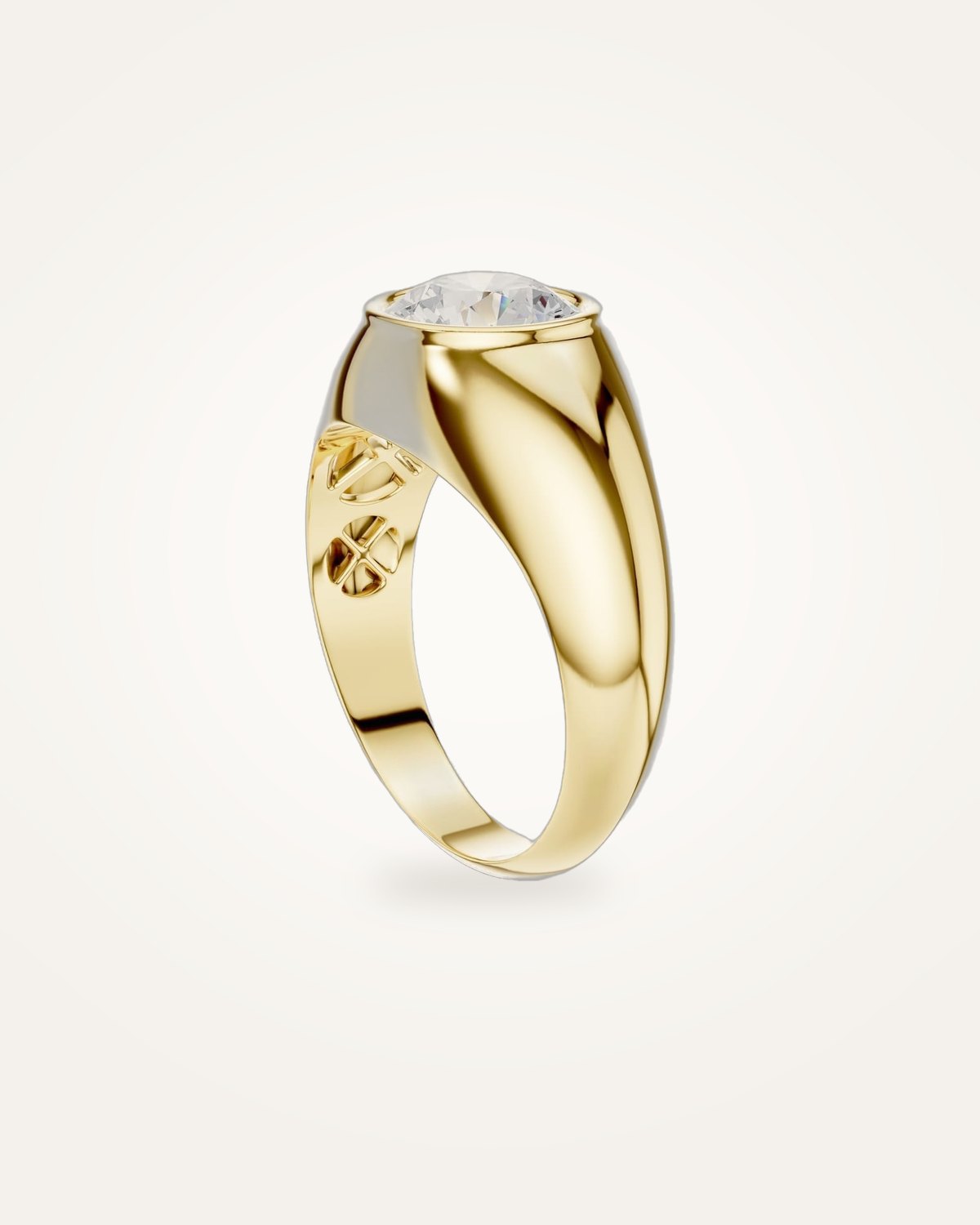
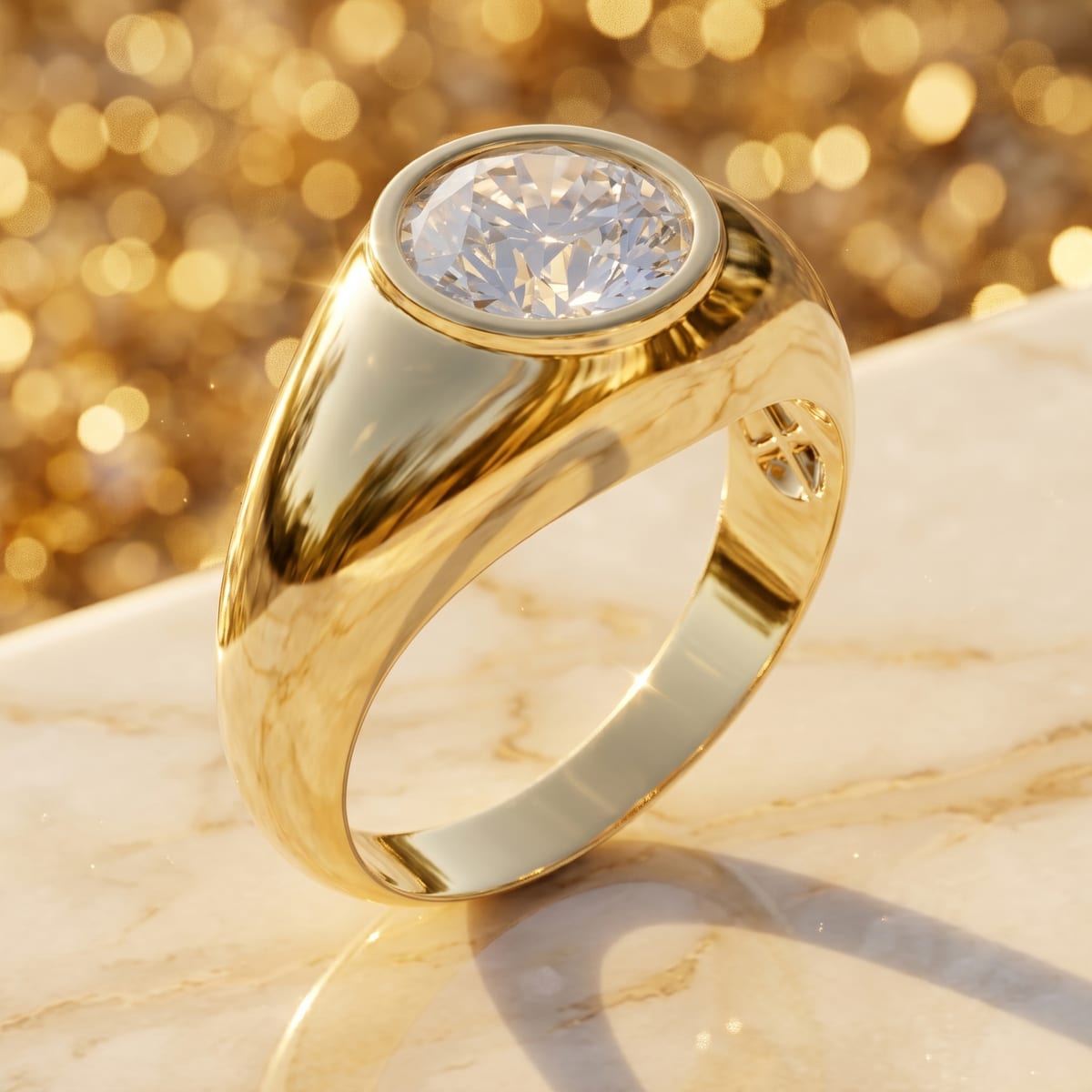
Every Shifora product page lists its stones in detail, with the report where one is stated. Our Taara solitaire ring, for example, holds a 0.50 ct round brilliant, F colour, VS1 clarity, with an IGI report. If you would like to know more about the origin of a particular stone, or to ask whether a design can be made with a lab-grown or a natural diamond of your choice, write to our atelier and we will answer plainly.
In brief
Is a lab-grown diamond a real diamond? Yes. It is pure carbon in the same crystal structure as a mined diamond, with the same hardness and the same optical properties. It is not a simulant like cubic zirconia or moissanite.
Can a jeweller tell lab-grown and natural diamonds apart by eye? No. They look identical, even under a loupe, and basic diamond testers read both as diamond. A gemmological laboratory with specialist instruments is needed to identify the origin.
Does a grading report say if a diamond is lab-grown? Yes. Reports from laboratories such as IGI and GIA state whether the diamond is natural or laboratory-grown, and many diamonds carry a laser inscription that matches the report number.
Which holds its value better? Natural diamonds. Resale of any diamond is usually below the retail price, but the market for lab-grown diamonds is much thinner and offers are usually low.
Which should I choose for an engagement ring? Choose on what matters to you: rarity and lasting value, or the most size for your budget. Our guide on how to choose an engagement ring walks through the rest of the decision, and our FAQ answers questions on certification and delivery.
Questions about a piece, a size or a delivery? Write to us at info@shiforaa.com or book a private video appointment with the atelier.